PLM Strategy & Roadmap
Develop a long-term PLM strategy and actionable roadmap that aligns people, processes, data, and technology with your business objectives and product strategy.
Why PLM Strategy Matters
Product Lifecycle Management is a long-term investment that touches nearly every function in the product enterprise — engineering, manufacturing, quality, supply chain, service, and IT. Without a clear strategy, PLM programs drift toward point solutions, fragmented data, and missed business value. A well-defined PLM strategy connects technology decisions to business outcomes and creates the foundation for sustainable competitive advantage.
What's in a Good PLM Strategy
A strong PLM strategy answers seven fundamental questions that shape decisions, investments, and outcomes.
1. Why are we doing PLM?
Business outcomes and value.
2. What does PLM cover?
Scope across lifecycle, functions, and data.
3. How should we work?
Processes, roles, governance, and standards.
4. What information should PLM manage?
Product data, BOMs, configurations, changes, requirements, quality, and traceability.
5. What systems should we use?
Integrated platform versus best-in-class architecture.
6. How will everything connect?
Digital thread, integrations, data ownership, and system-of-record decisions.
7. How will we implement and adopt it?
Roadmap, migration, organizational change management, training, and value realization.
PLMadvisors helps clients address these critical PLM strategy questions with a structured, vendor-neutral approach that connects business objectives, product development processes, data governance, application architecture, digital thread integration, implementation planning, and organizational adoption into a clear and actionable PLM roadmap.
A Proven, Repeatable Methodology
We follow a structured, four-step methodology that moves from understanding the current situation to defining the desired PLM deployment. Each step builds on the previous one, combining business needs, strategy, and goals into a coherent PLM strategy, and then translating that strategy into a practical selection and implementation roadmap.
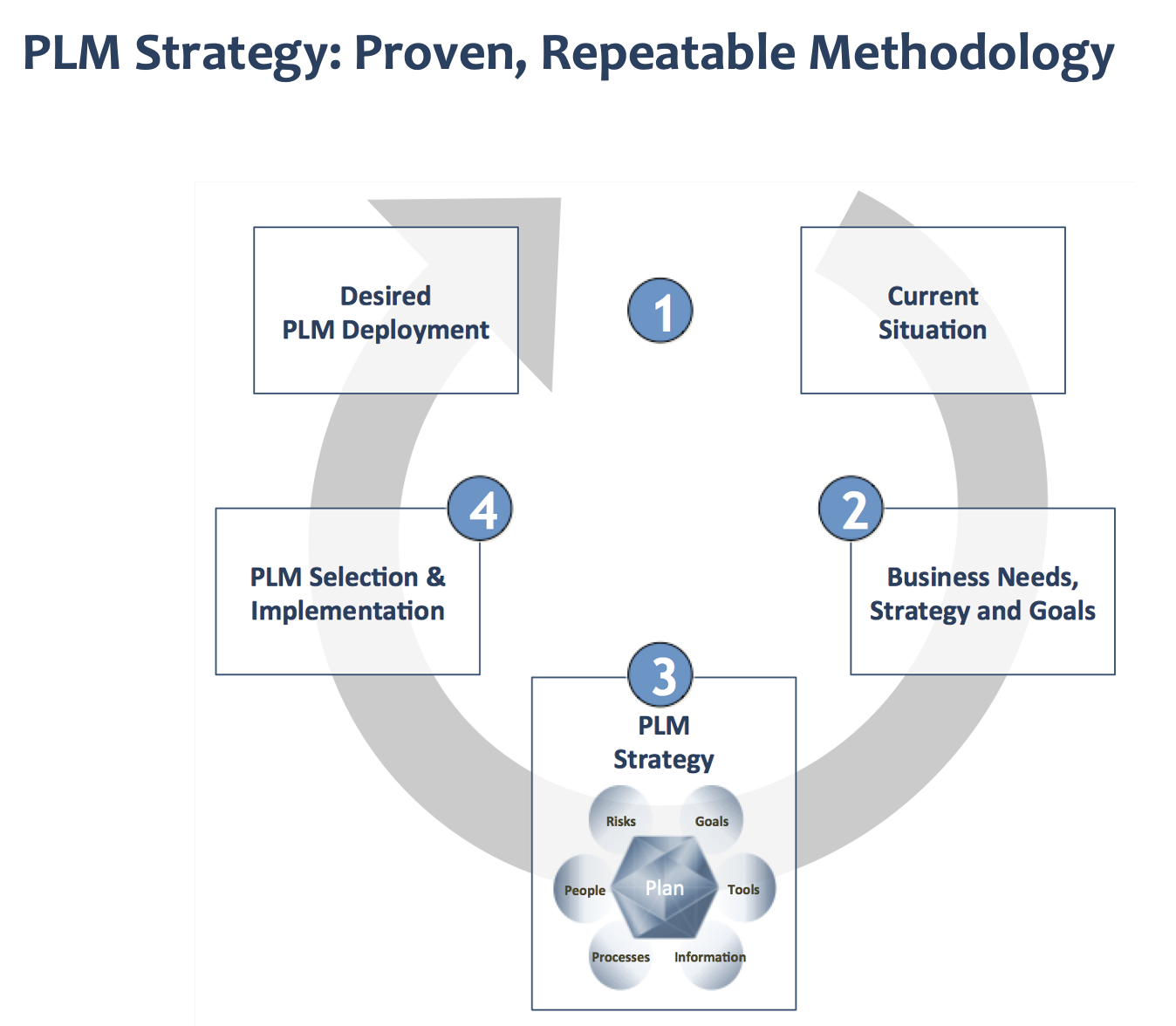
The Four Steps of PLM Strategy
1. Current Situation
Starting with our PLM Capability & Maturity Assessment, we assess your existing PLM landscape, processes, data, technology, and organizational maturity to establish a clear, evidence-based baseline.
2. Business Needs, Strategy and Goals
We align PLM ambitions with business priorities — product strategy, time-to-market targets, cost objectives, quality goals, compliance requirements, and digital transformation initiatives.
From Strategy to Phased, Value-Driven Execution
A strategy without a realistic roadmap is just a vision. We translate the target PLM architecture into an actionable, time-phased deployment plan that balances quick wins with foundational capabilities. The roadmap considers existing systems to be retired, planned capabilities, hypercare periods, and the transition to steady-state operation.
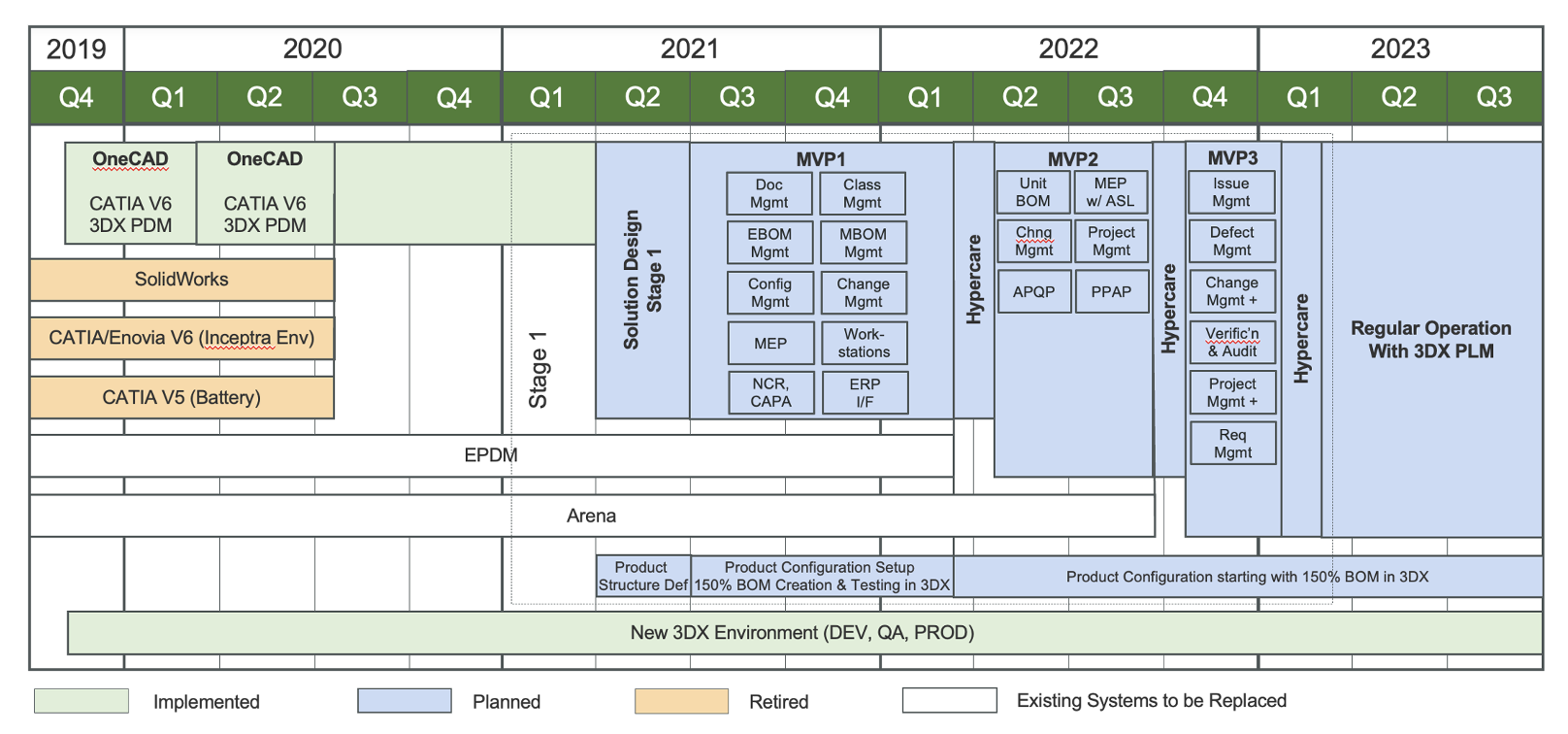
The roadmap is organized around sequenced stages and minimum viable products (MVPs) that deliver measurable value at each step. This approach reduces risk, builds organizational confidence, and ensures that each investment is justified by tangible business outcomes before the next phase is launched.
What You Receive
You receive a documented current-state assessment, a target PLM strategy and architecture, a multi-year roadmap with prioritized initiatives, a business case with expected benefits and investment profile, and a clear selection and implementation approach tailored to your organization.
Highlights
- →Clear, business-aligned PLM strategy and target architecture
- →Realistic, phased roadmap with sequenced initiatives and MVPs
- →Vendor-neutral guidance for system selection and implementation
- →Business case, benefit modeling, and investment prioritization
- →Risk-aware transition planning from legacy systems to target PLM
- →Governance, change, and adoption considerations built in from the start
Develop Your PLM Strategy and Roadmap
Tell us about your organization and we will outline how a tailored PLM strategy and roadmap can accelerate your product transformation.