Product Lifecycle Management, Volume 1
21st Century Paradigm for Product Realisation
- Author
- John Stark
- Publisher
- Springer Nature
- Series
- Decision Engineering
- Edition
- 6th edition
- Year
- 2026
- Pages
- 712
- ISBN
- 978-3-032-15224-4 (hardcover) · 978-3-032-15225-1 (eBook)
Summary
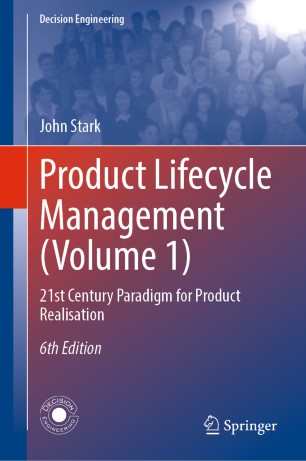
John Stark's standard reference explains what Product Lifecycle Management is, why companies need it, and the environment in which products are ideated, developed, manufactured, supported and retired.
It covers the main components of PLM — product-related business processes, product data, PDM systems and other PLM applications, best practices, company objectives and organisation — and the key activities of PLM Initiatives, including Organisational Change Management and Project Management.
The sixth edition updates the fifth edition (2021), described by the publisher as the most frequently cited PLM publication, with new chapters on PLM and AI, compliance, ESG and sustainability, and product management, alongside the relationships of PLM with IoT, Industry 4.0, Digital Twins, Digital Threads and Quality Management. The final part walks through the typical steps and activities of a PLM initiative.
Our verdict
Recommended reading. A good starting point for anyone exploring PLM, offering a comprehensive, vendor-neutral explanation of what PLM is and how to approach a PLM initiative. It is a reference to work through and return to, not a quick read.
Who should read it
- —Professionals new to PLM who need a solid, structured foundation
- —PLM program and project managers preparing or restarting a PLM initiative
- —Executives and business leads building a shared PLM vocabulary across functions
- —Students and educators in engineering and operations management
How it relates to your work
- —Use the components view (processes, data, applications, organisation) to structure a PLM assessment or strategy.
- —The PLM Initiative chapters map well to building a roadmap, business case and change plan.
- —New AI, compliance and sustainability chapters help position current topics within a PLM program.
- —Targeted reading for change management: Chapter 14, "PLM and Organisational Change Management" (pp. 443–475), directly connects OCM with the PLM environment and initiative.
Keep in mind
- —Broad and conceptual: it explains what to do and why, not how to configure a specific PLM system.
- —At 700+ pages and academic pricing, many readers will use it as a reference or access it through an institution.