What is worth reading in PLM.
Books, papers and articles on PLM, new product development, innovation, configuration management and modularization — each with a brief summary and our editorial judgment on who should read it and why.
Product Lifecycle Management, Volume 1
21st Century Paradigm for Product Realisation
John Stark · 6th edition · 2026 · Springer Nature
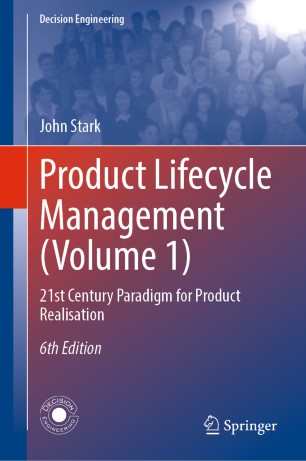
John Stark's standard reference explains what Product Lifecycle Management is, why companies need it, and the environment in which products are ideated, developed, manufactured, supported and retired.
Our verdict: Recommended reading. A good starting point for anyone exploring PLM, offering a comprehensive, vendor-neutral explanation of what PLM is and how to approach a PLM initiative. It is a reference to work through and return to, not a quick read.
Read the full review →Product Design and Development
Karl T. Ulrich, Steven D. Eppinger, Maria C. Yang · 8th edition · 2026 · McGraw-Hill Education
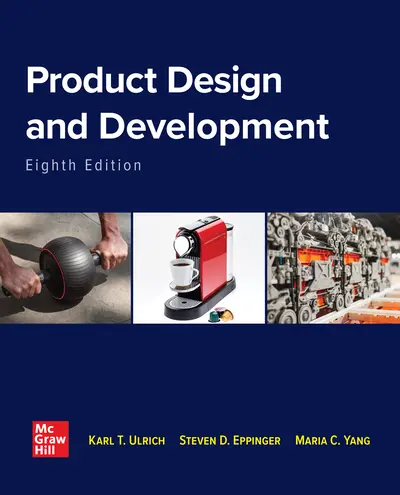
A central methods reference for product development that combines marketing, engineering design and manufacturing perspectives in one structured process.
Our verdict: Recommended reading. The standard textbook on the product development process itself: methodical, practical and usable as a step-by-step reference for structuring development work.
Read the full review →Digital Thread for Manufacturing
NIST · 2026 · National Institute of Standards and Technology (NIST)
NIST's program page for its digital thread research, which aims to connect product and manufacturing information across design, production and inspection.
Our verdict: Worth bookmarking — free. A credible, vendor-neutral starting point for understanding digital thread and model-based enterprise, with links to deeper NIST publications.
Read the full review →STEP at NIST
NIST · 2026 · National Institute of Standards and Technology (NIST)
NIST's gateway to STEP (ISO 10303), the international standard for exchanging product data between CAD, PDM/PLM and other engineering systems.
Our verdict: Worth bookmarking — free. An accessible entry point to STEP and engineering data exchange, useful whenever CAD or PLM interoperability is on the table.
Read the full review →Methodology for defining data requirements for the Digital Product Passport under the ESPR framework
European Commission Joint Research Centre (JRC) · 2026 · Publications Office of the European Union
A JRC report presenting a step-by-step methodology for deciding which data should be included in Digital Product Passports (DPPs) under the EU Ecodesign for Sustainable Products Regulation (ESPR), and why.
Our verdict: Highly relevant — free. A timely, authoritative reference for anyone who must turn Digital Product Passport requirements into concrete product data; essential context for PLM and compliance teams in Europe.
Read the full review →Magic Quadrant for PLM Software in Discrete Manufacturing Industries
Sudip Pattanayak, Marc Halpern, et al. · 2026 · Gartner
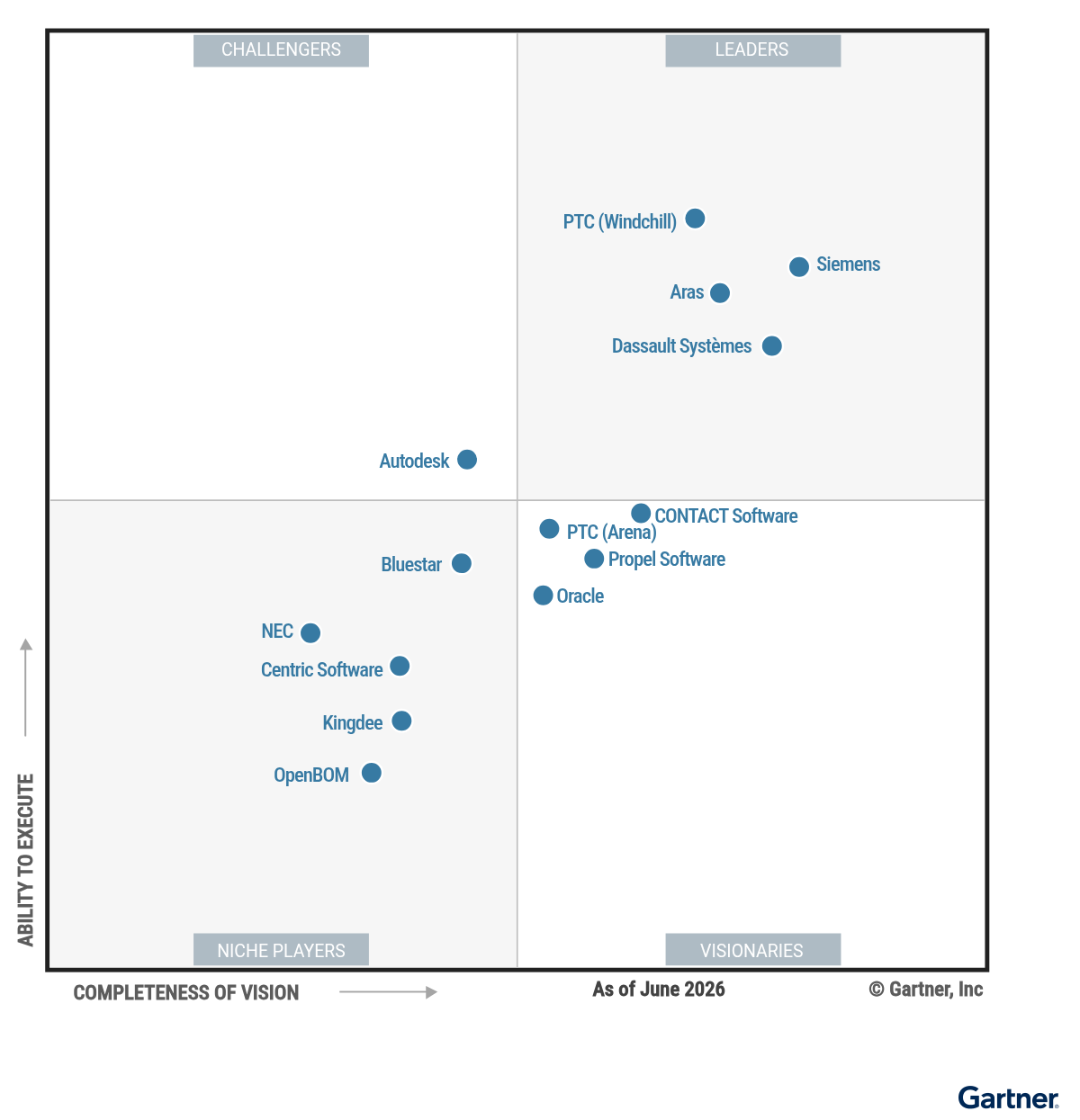
Gartner's 2026 Magic Quadrant evaluates PLM software vendors for discrete manufacturing, defining the market around mandatory capabilities such as multidomain CAD integration, digital thread enablement, product structure and BOM management, integrated product development, decision intelligence, quality and compliance management, AI-enabled data authoring, and enterprise APIs.
Our verdict: Recommended reading — free licensed reprint. The most current analyst view of the PLM vendor landscape: useful for vendor shortlisting and for understanding which capabilities Gartner considers mandatory in a modern PLM platform.
Read the full review →Managing Innovation
Integrating Technological, Market and Organizational Change
Joe Tidd, John Bessant · 8th edition · 2025 · Wiley
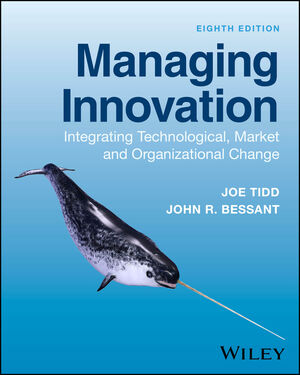
A standard textbook on innovation management that treats innovation as the integration of technological, market and organizational change rather than a purely technical activity.
Our verdict: Recommended reading. Places organizational change within the broader innovation system — useful for examining the structures, capabilities and management practices a PLM or innovation initiative depends on.
Read the full review →Product Lifecycle Management (Volume 2)
The Devil is in the Details
John Stark · 4th edition · 2024 · Springer Cham
The companion to Volume 1 moves beyond a general introduction to PLM and gives a more in-depth analysis of the subjects introduced there.
Our verdict: Recommended reading for practitioners. Where Volume 1 explains what PLM is, Volume 2 is the detailed working reference for product data, processes, applications, people and organisational change — good read once you are planning or running a PLM initiative.
Read the full review →Systems Engineering Body of Knowledge (SEBoK)
BKCASE (Stevens Institute, Naval Postgraduate School, INCOSE and others) · 2024 · sebokwiki.org
The Systems Engineering Body of Knowledge is a community-maintained, freely available reference covering systems engineering knowledge areas, lifecycle processes and related disciplines.
Our verdict: Worth bookmarking. A free, continuously updated reference rather than a book to read end to end: useful for looking up systems engineering concepts, lifecycle models and their relationship to PLM and configuration management.
Read the full review →Unleashing the Power of Artificial Intelligence in New Product Development
Building AI Into Your Stage-Gate® New-Product Process
Robert G. Cooper · 2024 · Stage-Gate International
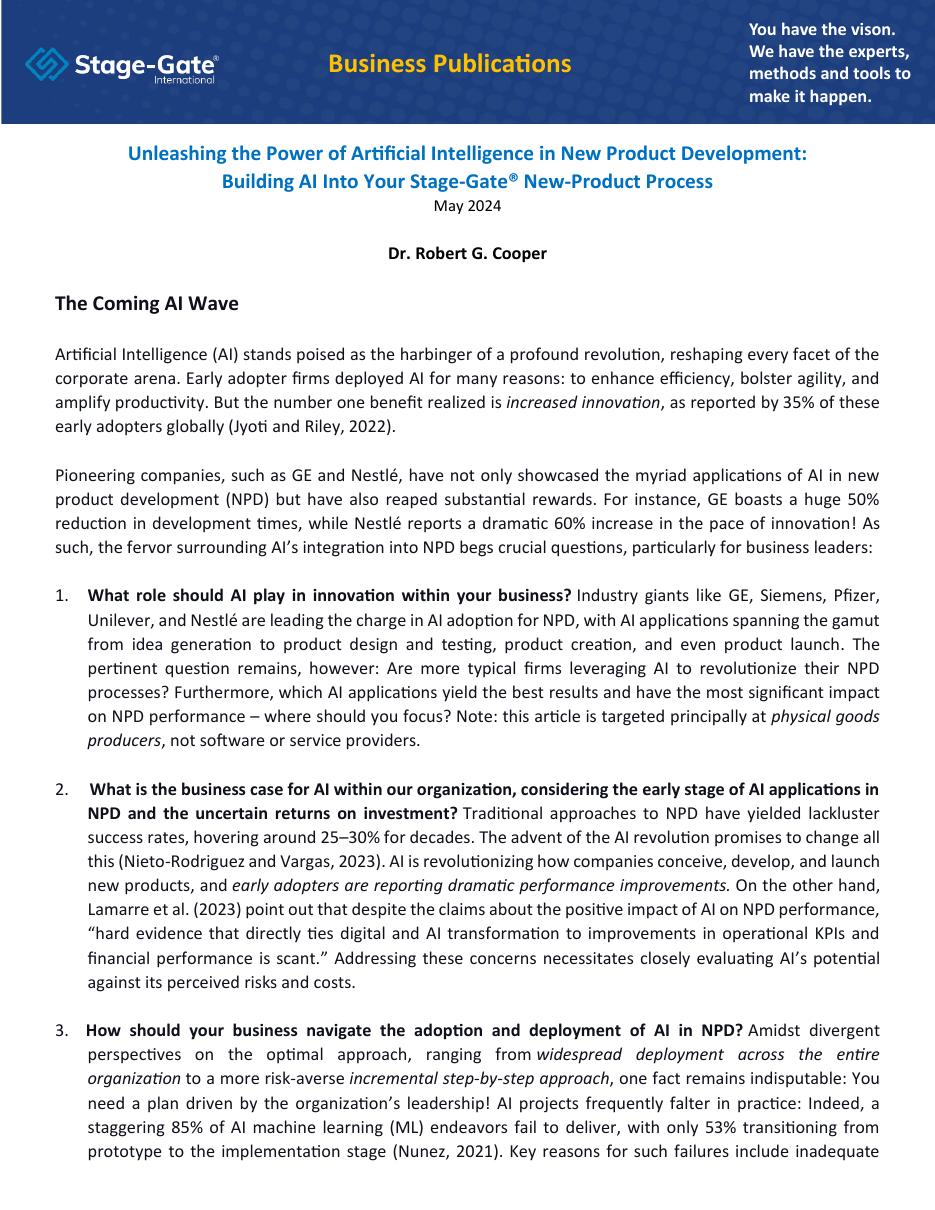
Cooper examines how companies, particularly physical-goods producers, can use AI across new product development — from idea generation and product design and testing to product creation and launch.
Our verdict: Worth reading — free. A practical, accessible introduction to applying AI in product development. Note that it is practitioner material from the Stage-Gate ecosystem rather than independent peer-reviewed research.
Read the full review →Know a resource worth reading?
Suggest a book, paper, article or report that belongs in the PLM Library. Send us its name and a link and we will review it for inclusion.
Sign in or register to suggest a resource →Summaries and verdicts are PLMadvisors' independent editorial opinions. No paid placement.