What is worth reading in PLM.
Books, papers and articles on PLM, new product development, innovation, configuration management and modularization — each with a brief summary and our editorial judgment on who should read it and why.
The Principles of Product Development Flow
Second Generation Lean Product Development
Donald G. Reinertsen · 2009 · Celeritas Publishing
Reinertsen adds an economic and flow perspective to product development, applying queueing theory and lean thinking to the management of engineering work.
Our verdict: Recommended reading for anyone managing development capacity. It changes how you think about utilization, batch sizes and queues in engineering — dense, but the most rigorous treatment of why development work stalls.
Read the full review →Engineering Design
A Systematic Approach
Gerhard Pahl, Wolfgang Beitz, Jörg Feldhusen, Karl-Heinrich Grote · 3rd edition · 2007 · Springer
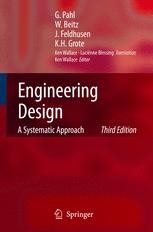
The English edition of the classic German textbook on systematic engineering design methods, covering the design process from task clarification through conceptual design, embodiment design and detail design.
Our verdict: Recommended reading for engineering fundamentals. The standard reference on systematic design methodology: rigorous and comprehensive, it grounds PLM discussions in how engineering work is actually structured.
Read the full review →Product Lifecycle Management
Driving the Next Generation of Lean Thinking
Michael Grieves · 1st edition · 2006 · McGraw-Hill
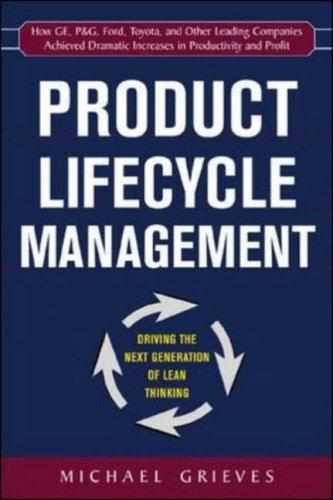
Michael Grieves presents PLM as a business approach in which information substitutes for wasted time, energy and material — extending lean thinking across the whole product lifecycle.
Our verdict: Recommended for the 'why'. One of the clearest explanations of PLM's business rationale, and the origin of the Information Mirroring Model that later became the digital twin concept — read it to argue for PLM, not to plan the implementation details.
Read the full review →Product Lifecycle Management: Closing the Knowledge Loops
Farhad Ameri, Deba Dutta · 2005 · Computer-Aided Design & Applications, Vol. 2, No. 5, pp. 577–590
Starting from the failure of the Swedish warship Vasa as an example of poor learning, feedback and organisational memory in product development, the paper argues that these problems still undermine product realisation today.
Our verdict: Worth reading — short and free. A concise academic explanation of why PLM is ultimately about capturing and reusing knowledge, not just managing files; a good primer before larger books.
Read the full review →Democratizing Innovation
Eric von Hippel · 2005 · MIT Press
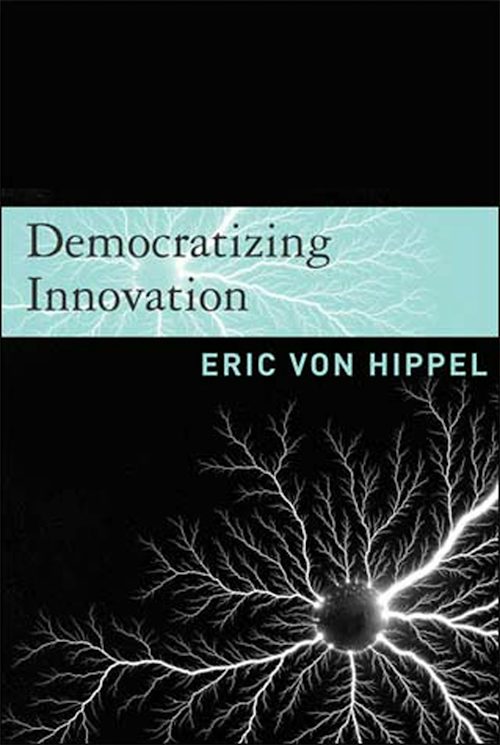
Von Hippel shows that users — both individuals and firms — are often the first to develop new products and services, and explains why they innovate and freely share their innovations.
Our verdict: Worth reading — and freely available. An influential, evidence-based case for involving lead users and customers directly in product innovation.
Read the full review →Open Innovation
The New Imperative for Creating and Profiting from Technology
Henry Chesbrough · 2003 · Harvard Business School Press
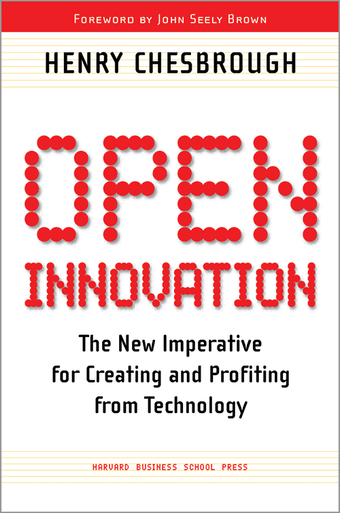
Chesbrough contrasts the traditional 'closed' model of innovation, in which companies generate, develop and commercialize ideas entirely in-house, with an 'open' model that deliberately uses external ideas and external paths to market.
Our verdict: Recommended reading. The book that defined open innovation — still the clearest explanation of why external knowledge, IP strategy and business models matter as much as internal R&D.
Read the full review →Cradle to Cradle
Remaking the Way We Make Things
William McDonough, Michael Braungart · 2002 · North Point Press (Macmillan)
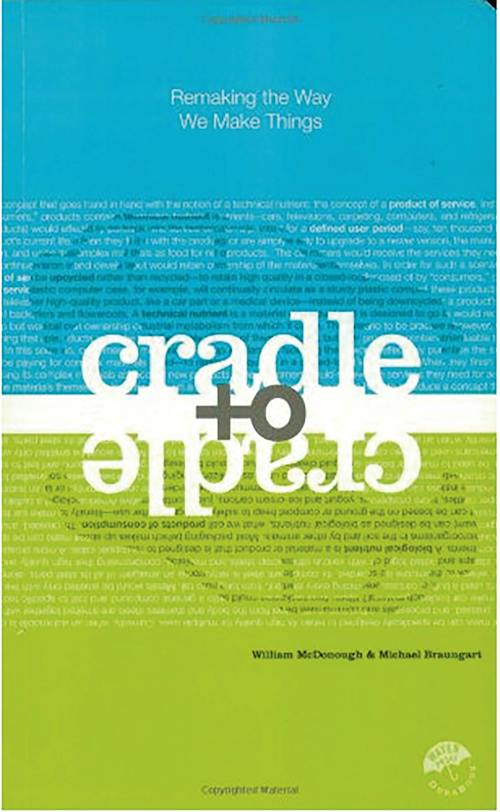
An architect and a chemist argue that 'less bad' eco-efficiency is not enough, and that products should instead be designed from the start so their materials can circulate safely and indefinitely.
Our verdict: Recommended reading. The foundational, highly readable manifesto behind circular design; it reshapes how you think about materials and end of life, even if it offers little implementation detail.
Read the full review →The role of product architecture in the manufacturing firm
Karl T. Ulrich · 1995 · Research Policy, Vol. 24, pp. 419–440
The foundational academic paper on product architecture: the arrangement of functional elements and the mapping from function to physical components, and the interfaces between them.
Our verdict: Recommended reading. The classic definition of product architecture and modularity — short, clear and still the reference point for platform, modularization and variant management discussions.
Read the full review →Revolutionizing Product Development
Quantum Leaps in Speed, Efficiency, and Quality
Steven C. Wheelwright, Kim B. Clark · 1992 · Free Press (Simon & Schuster)
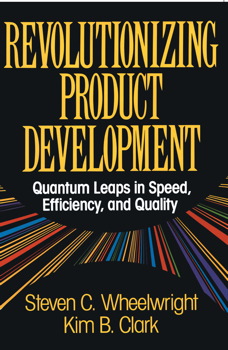
A classic on development strategy and organizational capability, based on the authors' research into leading product development organizations.
Our verdict: Worth reading for the strategic view. An older book, but its treatment of development capability, project mix and cross-functional integration remains relevant and is still widely cited.
Read the full review →Stage-gate systems: A new tool for managing new products
Robert G. Cooper · 1990 · Business Horizons, Vol. 33(3), pp. 44–54
The foundational article on Stage-Gate: organizing new product development into defined stages separated by decision gates where projects are continued, held or stopped.
Our verdict: Recommended for context. A short, readable original source for the stage-gate concept that most development organizations use in some form — the article behind Cooper's later books.
Read the full review →Know a resource worth reading?
Suggest a book, paper, article or report that belongs in the PLM Library. Send us its name and a link and we will review it for inclusion.
Sign in or register to suggest a resource →Summaries and verdicts are PLMadvisors' independent editorial opinions. No paid placement.